
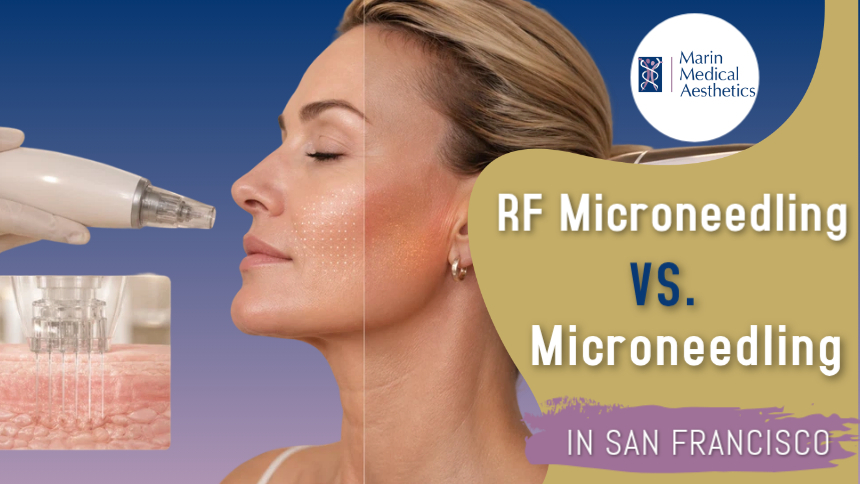
Microneedling has become one of the most requested skin rejuvenation treatments in the San Francisco Bay Area because it speaks to concerns many patients share: fine lines, acne scars, rough skin texture, enlarged pores, stretch marks, hyperpigmentation, and the gradual loss of firmness that can happen as collagen and elastin decline. But once you start researching microneedling San Francisco options, you quickly run into another question: should you choose traditional microneedling or RF microneedling?
The answer depends on your skin type, treatment area, downtime tolerance, and goals. Traditional microneedling creates controlled micro-channels to trigger the skin’s repair response. RF microneedling adds radiofrequency energy, which delivers heat beneath the skin’s surface to support collagen production and tightening in a different way. Both can be useful. Neither is automatically better for everyone.
At Marin Medical Aesthetics in San Anselmo, the priority is not pushing the newest device. It is matching the right microneedling treatment to your skin, your comfort level, and your desired outcome.
What Traditional Microneedling Does
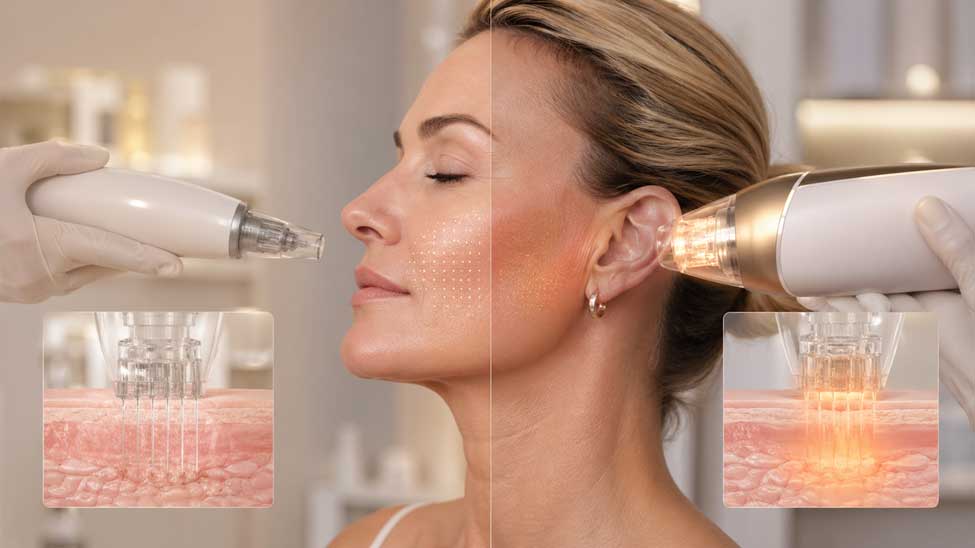
Traditional microneedling with SkinPen uses a microneedling device to create tiny, controlled channels in the skin. These micro-injuries signal the body to begin repair, supporting new collagen and elastin over time. A topical numbing cream is typically applied first to improve comfort.
Traditional microneedling may be considered for fine lines, acne scars, surgical scars, uneven skin tone, rough skin texture, enlarged pores, and selected stretch marks. Because it does not use laser light or heat in the same way as many energy-based treatments, it may be appropriate for a broad range of skin types when performed by a trained provider using appropriate settings.
Patients often like traditional microneedling because it is versatile and has a predictable recovery pattern. Downtime varies, but temporary redness, tightness, peeling, dryness, and sensitivity can occur. A series is usually recommended because collagen production takes time and results build gradually.
What RF Microneedling Adds
RF microneedling combines microneedling with radiofrequency energy. The needles create controlled channels, and RF energy delivers heat into the dermis. This can be helpful when the treatment goal includes firmness, mild skin laxity, texture improvement, and collagen remodeling.
At Marin Medical Aesthetics, treatments such as Scarlet RF and EXION are part of the broader skin tightening and rejuvenation conversation. Scarlet combines radiofrequency and microneedling to support collagen and elastin. EXION uses radiofrequency and ultrasound technology to support skin rejuvenation and texture. Your provider can explain which technology fits your treatment plan.
RF microneedling can be appealing for patients who want to address texture and firmness at the same time. It may be considered for fine lines, acne scars, enlarged pores, crepey texture, and mild sagging skin. However, because heat is involved, settings, depth, and patient selection matter. RF microneedling is a medical-style treatment, not a casual facial.
Which Is Better For Skin Tightening?
For skin tightening, RF microneedling is often considered the stronger option because radiofrequency heat can target deeper layers where collagen remodeling and tissue contraction are relevant. It may be more appropriate for mild laxity on the lower face, jawline, neck, or selected body areas, depending on the device and candidacy.
Traditional microneedling can still improve skin quality and texture, which may make skin look smoother and more refined. But if the main concern is loose skin, sagging skin, or visible laxity, your provider may recommend RF microneedling, EXION, Emtone, or another skin tightening approach instead of traditional microneedling alone.
It is important to keep expectations realistic. Non-surgical treatments can support firmness and collagen, but they do not reproduce the result of a facelift or surgical tightening. Results vary by age, skin laxity, collagen response, treatment area, and treatment plan.
Which Is Better For Acne Scars And Texture?
Both treatments may help acne scars and skin texture. Traditional microneedling is frequently chosen for textural acne scars because it supports collagen without adding heat. RF microneedling may be useful when acne scars are paired with enlarged pores, laxity, or thicker texture. In some cases, a patient may benefit from a series that includes microneedling, RF microneedling, chemical peels, Halo, BBL, or medical skincare.
The scar type matters. Shallow rolling scars may respond differently than ice-pick scars or tethered scars. Hyperpigmentation may need a different strategy than indentation. Active acne, sunburn, recent tanning, or inflamed skin can change the timing of treatment. A provider should evaluate your skin in person before recommending one option.
Downtime And Recovery: What To Expect
Downtime depends on the treatment intensity, skin type, device settings, and treatment area. Traditional microneedling often causes temporary redness and sensitivity, similar to a sunburn-like appearance, followed by dryness or light flaking. RF microneedling may involve redness, swelling, pinpoint marks, warmth, or tenderness. Some patients need more social downtime with RF microneedling than with a lighter traditional microneedling session.
After either treatment, your skincare routine should be gentle. Your provider may recommend avoiding retinoids, exfoliating acids, active products, heavy workouts, heat exposure, and direct sun for a period of time. Sunscreen is essential because treated skin can be more sensitive to sun exposure and pigment changes.
The FDA advises patients considering microneedling to discuss benefits, risks, candidacy, infection prevention, and device safety with a trained health care provider. That does not mean every RF microneedling treatment is unsafe, but it does mean provider training, device selection, patient screening, and conservative judgment matter.
Who May Be A Good Candidate?
You may be a candidate for traditional microneedling if you want gradual improvement in skin texture, fine lines, acne scars, pores, or overall skincare quality with a collagen-stimulating treatment. You may be a candidate for RF microneedling if you also want to address mild skin laxity, firmness, or deeper remodeling.
You may need to postpone or avoid treatment if you have an active rash, infection, uncontrolled acne flare, recent sunburn, a history of keloid scarring, certain autoimmune or healing conditions, pregnancy, recent isotretinoin use, or other contraindications. Candidacy is individual, so your consultation should include medical history, skin history, medications, and aesthetic goals.
Why Provider Experience Matters
The difference between a good result and an avoidable problem often comes down to evaluation and technique. An experienced provider considers skin type, skin tone, treatment depth, energy level, number of passes, treatment area, and aftercare. They also know when not to treat.
This is especially important in the Bay Area, where patients may be comparing med spa deals, plastic surgery offices, dermatology clinics, and medical aesthetic practices. Choosing a physician-supervised clinic can help ensure your treatment plan is thoughtful, safe, and tailored instead of rushed.
Microneedling FAQs
Q: Does Microneedling Work For Fine Lines?
A: Microneedling can support collagen production, which may soften the appearance of fine lines over time. RF microneedling may be considered when fine lines are paired with laxity.
Q: Is RF Microneedling Better For Skin Tightening?
A: Often, yes, for mild laxity, because RF energy adds heat-based remodeling. But the best choice depends on your skin type, goals, and risk profile.
Q: Can Microneedling Help Hyperpigmentation?
A: It may help overall texture and tone, but hyperpigmentation can be sensitive. Some pigment concerns may require skincare, chemical peels, BBL, or a more conservative plan.
Q: How Many Treatments Will I Need?
A: Most patients need a series rather than one session. Your provider will recommend timing based on your treatment area, skin response, and goals.
Q: Should I Choose A Med Spa Or Medical Clinic?
A: For microneedling and RF microneedling, provider training matters. Look for a clinic that evaluates candidacy, explains side effects, uses appropriate sterile protocols, and creates a treatment plan rather than selling a one-off procedure.
Ready To Compare Your Options?
If you are researching microneedling in San Francisco, Marin County, or the greater Bay Area, Marin Medical Aesthetics can help you compare traditional microneedling, RF microneedling, EXION, Scarlet RF, laser treatments, and skincare in a personalized consultation. The right plan should feel clear, realistic, and designed around your skin.
Related Resources:
- Non-surgical vs. Minimally Invasive in San Anselmo
- Non-Surgical Anti-Aging Treatments in San Anselmo
- Achieve Your Dream Body in 2026 in San Anselmo